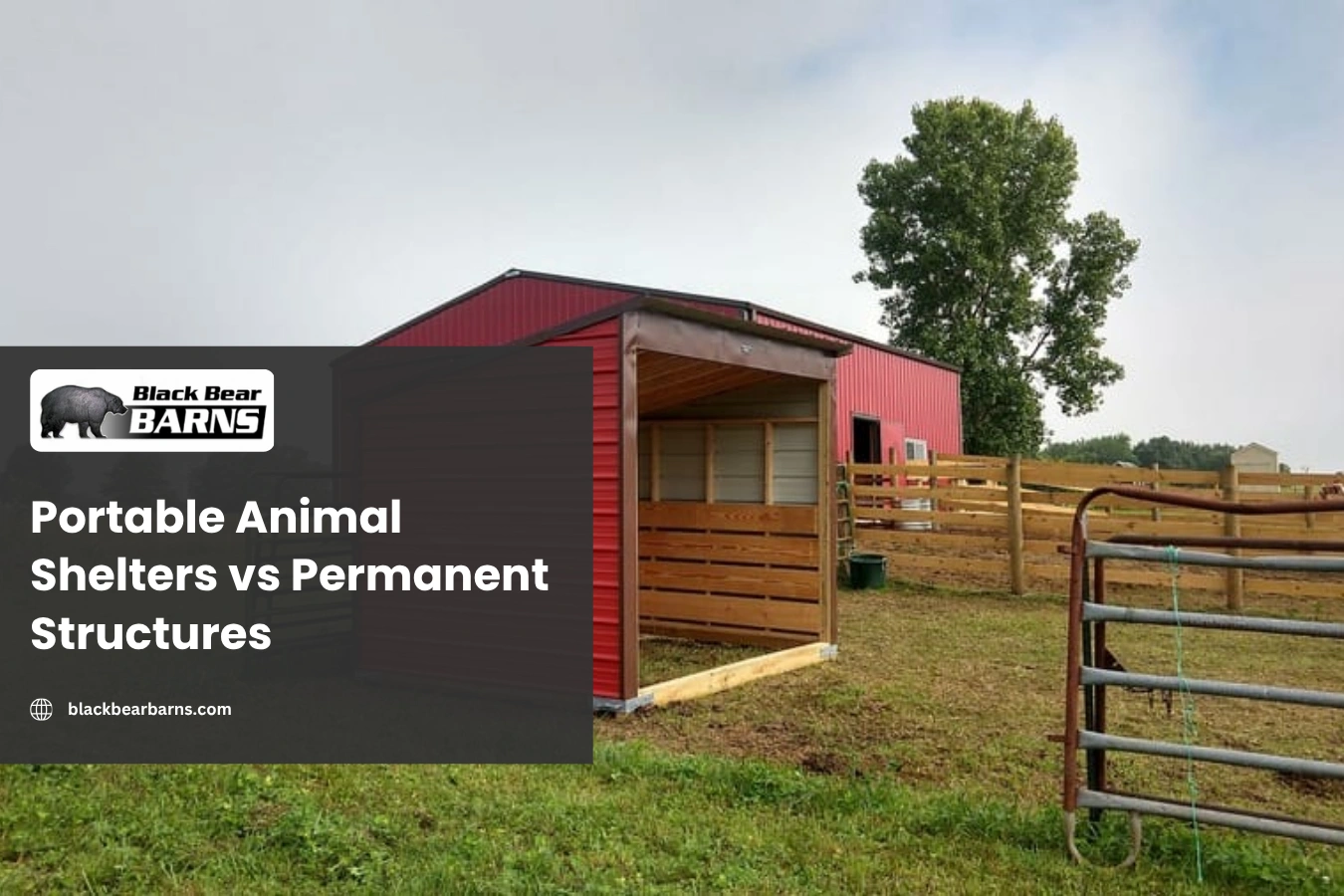
Choosing an animal shelter is about more than adding a roof to your property. You want a space that suits your animals, works with your daily routine, and makes sense for your budget.
One of the first decisions is whether to choose a portable shelter or a permanent structure.
Portable animal shelters can offer flexibility when your property layout changes. Permanent structures provide a fixed location that you can build your animal care routine around. Each approach has advantages, and understanding those differences can help you make a confident choice.
For Missouri animal owners, a useful starting point is deciding what you actually need the shelter to do. Are you looking for a covered resting area? Do you need a central barn with separate spaces? Are you still planning your pasture layout?
At Black Bear Barns, our Regular Style and Value Style animal shelters give you two options to explore as you plan. Let’s take a closer look at portable animal shelters vs permanent structures and what matters most before you buy.
What Is a Portable Animal Shelter?
A portable animal shelter is designed to allow relocation using an appropriate moving method. Depending on the structure, that may require professional equipment and preparation.
The main appeal is flexibility. Instead of planning around a building that must stay in one place, you may have the option to change its position when your property needs change.
For example, you might adjust your fencing, develop another pasture, or find a location that makes daily animal care easier.
However, a building that arrives fully assembled is not automatically suitable for repeated moves. Its design, installation, anchoring, and site conditions all affect relocation.
If portability is a priority, ask the supplier whether the specific shelter can be moved and what that process involves. For Black Bear Barns models, confirm these details directly with our team before making relocation part of your plans.
What Is a Permanent Animal Shelter?
A permanent animal shelter is intended to remain in a fixed location. It may use a permanent foundation or another support system designed for that site.
Permanent structures range from simple covered shelters to larger barns with separate stalls, storage rooms, and work areas.
They can be a good choice when you already have a settled property layout. If your feeding area, water access, fencing, and daily chores all center on one location, a fixed shelter may fit naturally into that routine.
A larger permanent building can also accommodate a more involved project. You might want enclosed spaces, several animal areas, or dedicated storage within the same structure.
The important question is whether you need that larger setup now or whether a more focused shelter would meet your current needs.
Portable Animal Shelters vs Permanent Structures: Main Differences
| Feature | Portable Animal Shelters | Permanent Structures |
|---|---|---|
| Location | Designed to allow relocation under suitable conditions | Intended to stay in one location |
| Property planning | Useful when the layout may change | Useful when the layout is established |
| Typical purpose | Often used for a focused shelter need | May combine shelter, stalls, storage, and work areas |
| Site preparation | Requires suitable ground and secure installation | Often requires more extensive foundation work |
| Future changes | Relocation depends on the model and moving requirements | Changes usually involve modifying or expanding the building |
| Overall cost | Depends on size, features, preparation, and delivery | Depends on size, foundation, construction, and interior needs |
Neither category tells you everything about quality or value. A well chosen shelter should match your animals and property, regardless of whether it can be moved.
Which Option Fits Your Budget?
A portable shelter may be an appealing option when your goal is to provide a practical covered space without taking on a larger barn project.
Permanent construction can involve several additional costs. Foundation work, enclosed rooms, utilities, and interior finishes may all contribute to the total.
However, portable animal shelters are not automatically less expensive in every situation. Size, materials, features, delivery access, and site preparation still matter.
The best way to compare costs is to start with the same requirements.
If you need a covered resting area, compare structures that provide that function. Comparing a basic shelter with a barn containing stalls and storage will not give you a useful picture of value.
Before choosing, account for:
- The purchase or construction price
- Site preparation
- Delivery or construction access
- Anchoring or foundation requirements
- Optional features
- Ongoing maintenance
A clear quote helps you understand what is included and what you may need to arrange separately.
At Black Bear Barns, discussing your intended use and budget gives us a helpful starting point for comparing our animal shelter styles.
How Important Is Flexibility on Your Property?
Think about how your property might change over the next few years.
You may be comfortable with your current setup but still expect to add fencing, adjust animal areas, or improve access to water. Those changes can affect where a shelter works best.
A structure designed for relocation may be useful if you are still developing your land. It leaves more options open as you learn what works for your routine.
Flexibility may matter if you:
- Plan to change pasture boundaries
- Use different areas for grazing
- Are adding animals gradually
- Want to keep space available for future projects
- Have not settled on a final farm layout
A permanent shelter can be equally practical when your layout is established. Keeping the building in one location allows you to organize paths, gates, and other facilities around it.
Rather than asking which option is better for every farm, ask how much flexibility your own property needs.
Choose a Shelter Around Your Animals
Your animals should guide the decision before appearance or price.
A shelter needs enough usable space for the animals that will share it. Their size, number, behavior, and care needs all influence the right layout.
Consider how they will enter and leave. An opening that works for one animal may become crowded when several try to use it together.
Also think about whether a dominant animal could prevent others from reaching the covered area. A shelter only serves its purpose when the animals that need it can access it comfortably.
Before discussing a model, prepare a few details:
- The type of animals you keep
- How many will use the shelter
- Their approximate size
- Whether they will use it together
- Whether you expect your group to grow
Share this information with Black Bear Barns when asking about available shelter dimensions. For species specific space and welfare requirements, seek guidance from your veterinarian or livestock adviser.
Plan for Missouri Weather and Ground Conditions
Both portable animal shelters and permanent structures need thoughtful placement.
A shelter can provide a covered area, but the ground around it also affects how useful that space will be. An entrance that regularly collects water may become difficult to maintain.
Look at your proposed location after rainfall if possible. Check whether water drains away or settles where the animals would stand.
You should also consider wind exposure and the direction of the opening. The most convenient location for you may not always offer the best conditions for the animals.
A practical site should allow:
- Reliable access to the shelter
- Suitable drainage
- Space around the entrance
- Convenient cleaning and maintenance
- Access for delivery or construction
Discuss installation and anchoring requirements before ordering. The right approach depends on the structure and the site.
Taking time to choose the location can help you get more everyday value from your shelter.
Explore Black Bear Barns Animal Shelter Styles
Black Bear Barns offers Regular Style and Value Style animal shelters. The website lists specific differences in roof shape, overhang, and wall height, giving you useful features to compare.
Regular Style Animal Shelter
Our Regular Style includes:
- An 18 inch front overhang
- A double slope roof
- 2 by 10 kickboard lining on the inside walls
- A back wall height of 7 feet 2 inches
- Optional height upgrades
If height is an important part of your decision, the listed upgrade option gives you something specific to discuss with our team. You can also compare the roof shape and front overhang with the Value Style before choosing.
Value Style Animal Shelter
Our Value Style includes:
- A 5 inch front overhang
- A single slope roof
- 2 by 10 kickboard lining
- A wall height of 6 feet 6 inches
- Optional anchors
This style is presented as an affordable shelter option with a functional design. Ask our team about current pricing, available dimensions, and whether it fits your intended use.
Comparing the two styles gives you a more useful starting point than choosing from photographs alone.
Think About Your Daily Chores
A shelter should fit the way you care for your animals.
Picture a normal day on your property. Where do you bring feed? How do you reach the water supply? Which gates do you use? Where will you carry bedding or cleaning tools?
A location that looks ideal from the house may create extra work if it sits far from the areas you use most.
For either shelter type, consider:
- Your route for feeding and watering
- Access for cleaning
- Visibility when checking animals
- Nearby gates and fence lines
- Space for equipment to reach the area
You do not need an elaborate layout to make daily care easier. Sometimes, choosing the right position and entrance direction makes a meaningful difference.
A permanent building allows you to organize chores around one established location. A portable design may provide more flexibility if those routines change later.
Plan for Growth Without Buying Unnecessary Space
It is sensible to think ahead, but future planning does not mean choosing the largest structure available.
Start with your current needs, then consider changes you realistically expect.
If you plan to add more animals soon, discuss whether a larger shelter would be useful. If your plans are uncertain, focus on a structure that serves your present setup well.
You might also find that separate shelters in different areas work better than one larger building. That depends on how you manage the animals and use your property.
Helpful questions include:
- Will I add animals in the near future?
- Will those animals use the same area?
- Could my fencing or pasture layout change?
- Do I need shelter only, or separate storage too?
- What size can my intended site accommodate?
These answers can help you avoid buying too little space or paying for features you will not use.
Compare Maintenance Needs Before Buying
Every animal shelter needs routine care.
You will need to monitor its condition, keep the surrounding area usable, and address damage or wear when it appears. Animal use can also create maintenance needs around entrances and interior surfaces.
The amount of work depends more on the structure’s materials, features, and use than on the label “portable” or “permanent.”
A larger enclosed barn may have more components to inspect. A simpler shelter may have fewer features, but it still needs attention.
Before ordering, ask about recommended care for the specific model. Knowing what to expect helps you choose a shelter you can maintain comfortably.
When Is a Portable Animal Shelter a Good Fit?
A portable animal shelter may suit you when flexibility is a key part of your plans.
It is worth exploring if you want a covered area for your animals while keeping future location options open.
For example, you may be developing a small property and still deciding where your permanent fence lines should go. A shelter designed for relocation could fit that stage of planning.
The essential step is confirming that the model supports your intended use. Ask about moving requirements, installation, and any limits before you buy.
If you are considering a Black Bear Barns shelter, tell our team that relocation is important so we can clarify the relevant model details.
When Is a Permanent Structure a Good Fit?
A permanent structure may make sense when you need a fixed central building with several dedicated spaces.
You might want stalls, storage, utilities, and work areas together. You may also have an established layout that already supports a building in one clear location.
In that situation, permanent construction can fit the way you manage the property.
You can also use different types of structures for different purposes. A central barn and a separate covered shelter do not have to compete with each other. Each can serve a useful role.
Questions to Ask Before Choosing Your Shelter
Before making a final decision, bring these questions to your supplier:
- Which model suits my animals and intended use?
- What sizes are available?
- Which features are standard?
- What upgrades are available for this model?
- What preparation does my site need?
- What installation and anchoring are required?
- Can the structure be relocated?
- What does the quote include?
For Black Bear Barns orders, also discuss delivery access and the proposed location. Our website describes delivery planning for finished structures, but your team should confirm the arrangements that apply to your animal shelter order.
Check applicable local placement or building requirements early so you can prepare with confidence.
Find the Right Animal Shelter With Black Bear Barns
Choosing between portable animal shelters and permanent structures becomes easier when you focus on your animals, your property, and your daily routine.
Flexibility may be your priority. Or you may need a fixed building that supports a larger setup. Either way, understanding the purpose of the shelter helps you make a more useful investment.
Black Bear Barns gives Missouri customers two animal shelter styles to compare, with clear differences in height, roof design, and overhang.
Contact Us About Your Animal Shelter
Ready to explore your options? Contact Black Bear Barns with your animal type, number of animals, preferred size, and property location.
Ask us about available models, current pricing, and the details that matter to your project. We can help you take the next step toward choosing your shelter.
Explore Our 3D Shed Builder Tool

Want to start visualizing your building ideas? Visit our 3D Shed Builder Tool to explore the available designs and options.
If an animal shelter feature you want is not shown, contact our team to confirm what is available for your chosen model.