
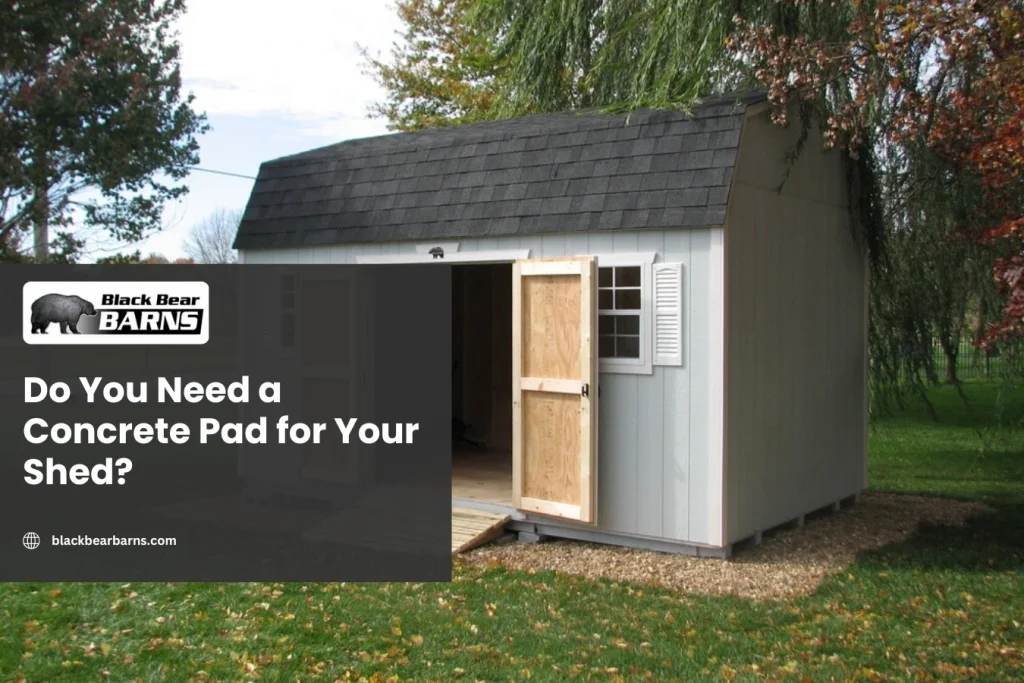
When planning a new shed for your property, one of the first big questions to answer is what kind of foundation you need. Should you invest in a concrete pad, or will a gravel or block base work just as well? The truth is, the right foundation depends on your shed’s purpose, size, and location. At Black Bear Barns, we’ve built and delivered thousands of quality sheds across Missouri, and we know that the foundation you choose can make a big difference in how long your shed lasts and how well it performs.
In this guide, we’ll explore everything you need to know about shed foundations, especially the pros and cons of using a concrete pad. You’ll learn when it’s necessary, when it’s optional, and what alternatives might serve you just as well. Our goal is to help you make an informed, confident decision so you can enjoy your shed for decades to come.
Why Your Shed Foundation Matters
Before deciding whether you need a concrete pad, it’s important to understand why a foundation matters in the first place. A good shed foundation does more than just hold the weight of your building. It provides long-term stability, prevents water damage, and ensures your shed doors and windows function properly.
Here’s what the right foundation can do for you:
Prevents moisture buildup under the shed, which helps protect the floor from rot and mold.
Keeps the structure level, so doors and windows open smoothly.
Distributes weight evenly, which is especially important for larger sheds or workshops.
Improves longevity, helping your shed last longer with less maintenance.
Protects your investment, especially if you’re using your shed for valuable tools, lawn equipment, or hobby spaces.
At Black Bear Barns, we build sheds designed for lasting strength and performance, but even the best-built structure performs best when it sits on the right base.
What Is a Concrete Pad Foundation?
A concrete pad foundation is exactly what it sounds like — a solid, poured concrete slab that serves as the base for your shed. It’s typically four to six inches thick, reinforced with rebar or wire mesh, and level across the entire surface. Once cured, it provides an incredibly durable surface that resists settling and moisture.
Concrete pads are popular for permanent sheds or buildings that will serve as garages, workshops, or cabins. They offer a clean, solid surface that’s easy to sweep and maintain. However, that durability comes with a higher cost and more preparation compared to other foundation types.
Benefits of a Concrete Pad for Your Shed
There are plenty of reasons homeowners choose concrete pads, especially for larger or more permanent backyard structures. If you’re considering one, here are the top benefits to keep in mind:
1. Exceptional Durability
Concrete is one of the most durable materials available. Once poured and set, it provides a solid base that won’t shift or settle over time. This makes it ideal for heavy sheds or workshops that house equipment, vehicles, or large tools.
2. Clean, Smooth Surface
A concrete slab gives your shed a clean, level floor that’s easy to keep tidy. You can easily sweep away dirt or debris and even hose down the area when needed. This makes it great for hobby spaces, home gyms, or garden workstations.
3. Superior Moisture Protection
When properly installed with a vapor barrier, a concrete pad minimizes moisture from the ground. This helps prevent mold or mildew, particularly if your shed is enclosed and insulated.
4. Permanent Stability
A concrete pad provides a foundation that won’t move. While gravel or block foundations can shift slightly over time, concrete maintains its position even through freeze-thaw cycles. This means your shed doors and windows will continue to function smoothly year after year.
5. Perfect for Finished Spaces
If you plan to use your shed as a workshop, home office, or studio, a concrete pad gives you a solid, professional-grade floor that’s easy to finish with epoxy or paint.
When You Need a Concrete Pad
While not every shed requires a concrete foundation, there are certain cases where it’s strongly recommended — or even necessary. If any of the following apply, a concrete pad might be your best option:
You’re installing a garage-style shed or large workshop.
You plan to drive or park heavy equipment like ATVs, mowers, or vehicles inside.
Your shed will have plumbing or electricity and will be used year-round.
You want a finished, insulated interior with flooring materials or cabinetry.
Your property has soft or uneven soil that doesn’t compact well for gravel.
If you’re investing in a permanent backyard structure, a concrete pad can give you peace of mind that your shed will remain strong and stable for decades.
When You Don’t Need a Concrete Pad
For many backyard sheds, a full concrete foundation simply isn’t necessary. Portable sheds — like the ones offered by Black Bear Barns — are designed to sit securely on other types of foundations, such as gravel or concrete blocks.
Here are some common scenarios where you can skip the concrete pad:
Storage sheds for lawn tools, bikes, or garden equipment.
Smaller sheds that are easy to relocate or reposition.
Seasonal buildings used for temporary storage or hobbies.
Budget-conscious buyers who want a reliable foundation without the added cost of concrete.
Our team often recommends gravel pads, which are affordable, quick to install, and provide excellent drainage. For many customers, a gravel base is the perfect balance between function, cost, and flexibility.
Gravel vs. Concrete: Which One Is Right for You?
If you’re torn between a gravel foundation and a concrete pad, here’s a quick breakdown of how they compare:
| Feature | Gravel Pad | Concrete Pad |
|---|---|---|
| Cost | Lower | Higher |
| Drainage | Excellent | Limited |
| Installation Time | Fast | Slower |
| Mobility | Easy to move shed later | Permanent |
| Durability | Strong and flexible | Extremely strong and stable |
| Ideal For | Portable sheds, storage | Permanent garages, workshops |
At Black Bear Barns, we can help you determine which foundation suits your specific shed and property conditions best.
Preparing Your Site for a Concrete Pad
If you’ve decided that a concrete foundation is right for your shed, proper site preparation is crucial. Here’s a simple overview of what that process looks like:
Choose the location. Pick a spot that’s level, well-drained, and accessible for delivery.
Mark your layout. Measure and mark the area according to your shed’s size, leaving a few extra inches around the perimeter.
Excavate the site. Remove grass, topsoil, or debris to create a level surface.
Add a gravel base. Pour a few inches of compacted gravel to help with drainage.
Build your form. Use wooden boards to frame the area where concrete will be poured.
Pour and level the concrete. Once poured, smooth the surface and allow it to cure for several days before placing your shed.
When you work with Black Bear Barns, our team will guide you on exactly what your foundation needs to meet local site conditions and ensure smooth delivery.
The Cost of a Concrete Pad Foundation
The cost of a concrete pad depends on several factors — including the size of your shed, the thickness of the slab, and local labor rates. On average, a concrete pad for a shed can range from several hundred to a few thousand dollars. While that’s a higher upfront investment than gravel, the payoff is a permanent, professional-grade base that adds long-term value to your property.
If you’re planning a high-end structure or workshop, the added stability and finish may be well worth the cost.
Alternatives to Concrete Pads
Not every shed requires a slab, and that’s good news for homeowners looking for flexibility. Some great alternatives include:
Gravel Foundation
A gravel pad remains the most popular foundation for portable sheds. It provides excellent drainage, is quick to install, and can easily be leveled. It also prevents water from pooling under the shed floor.
Concrete Blocks
Concrete blocks are an affordable and adjustable option for smaller sheds. They elevate the building off the ground, improving airflow and keeping moisture away from the wood.
Pavers or Timber Frames
For lightweight or decorative sheds, paver stones or pressure-treated timber frames can provide a sturdy, budget-friendly base.
Our experienced team at Black Bear Barns can help you select the most practical and cost-effective foundation for your new shed.
Why Choose Black Bear Barns for Your Shed
At Black Bear Barns, we don’t just build sheds — we build lasting structures that homeowners can rely on for years. Every shed is crafted with precision, using quality materials and built by skilled craftspeople who take pride in their work.
Here’s what sets us apart:
Quality materials that stand up to weather and time.
Custom options so you can design a shed that fits your property perfectly.
Flexible foundation choices for every style and budget.
Free delivery and setup within our local service area.
Friendly, knowledgeable support from start to finish.
Whether you need a simple garden shed, a garage, or a full backyard retreat, our team will make the process simple and enjoyable.
Design Your Shed with Our 3D Builder Tool

Want to see your dream shed before it’s built? Try our 3D Shed Builder Tool! You can design your structure from the ground up, choosing the size, color, roof style, siding, and even doors and windows. It’s a fun and easy way to visualize your space and get an instant quote — all from the comfort of your home.
Start designing today and see how easy it is to create the perfect backyard addition with Black Bear Barns.
Ready to Get Started?
Whether you decide on a concrete pad or another type of foundation, the most important step is choosing a shed company you can trust. At Black Bear Barns, we’ll help you find the right shed style, foundation, and customization options for your needs and budget.
Our experienced team is ready to guide you through every step — from design to delivery.
Contact us today to discuss your shed project or visit our 3D Builder Tool to start designing your custom shed now.